Together, we solve the challenges of tomorrow.
DISCOVER →Roadway engineering in League City forms the backbone of safe and efficient transportation across a rapidly growing suburban landscape between Houston and Galveston. This category encompasses the full lifecycle of pavement systems, from geotechnical investigation and subgrade evaluation to structural design and long-term performance monitoring. With League City's population expanding and commercial corridors like FM 518 and Interstate 45 experiencing heavier traffic loads, proper roadway design directly impacts public safety, emergency response times, and economic vitality. Engineers must balance initial construction quality with durability under the region's challenging environmental conditions, making informed pavement selection and soil analysis critical components of every project.
The local geology presents unique challenges that demand specialized geotechnical expertise. League City sits within the Gulf Coastal Plain, characterized by expansive clay soils of the Beaumont Formation that undergo significant volume changes with moisture fluctuations. These high-plasticity clays can swell when wet and shrink during dry periods, imposing severe stress on pavement structures. Additionally, the area's flat topography and near-sea-level elevation create drainage difficulties, with a shallow water table that frequently sits within five feet of the surface. Soft organic silts and scattered peat lenses in low-lying zones further complicate subgrade conditions, requiring thorough site investigation before any roadway design proceeds. A CBR study for road design becomes essential to quantify subgrade strength and predict pavement behavior under these variable soil conditions.
Regulatory compliance in League City follows the Texas Department of Transportation (TxDOT) standards, particularly the TxDOT Pavement Design Guide and the Geotechnical Manual, alongside local amendments in the League City Code of Ordinances. For flexible pavements, engineers adhere to the AASHTO 1993 design method adapted with Texas-specific climate factors and material specifications, while rigid pavement designs follow the ACPA and PCA guidelines integrated into TxDOT's rigid pavement design procedures. The city requires minimum pavement structural numbers based on projected 20-year traffic loads, with specific attention to expansive clay mitigation through lime or cement stabilization. All roadway projects must also comply with the Texas Commission on Environmental Quality's stormwater regulations, as impervious pavement alters natural drainage patterns in this flood-prone region.
This category serves diverse project types across League City's development spectrum. Residential subdivisions from South Shore to Hidden Lakes demand durable local streets with proper crown and subsurface drainage, while arterial expansions on routes like Calder Road require flexible pavement design that accommodates mixed traffic including heavy trucks. Commercial developments near the Baybrook Mall area and industrial parks along the Gulf Freeway corridor often necessitate rigid pavement design for loading docks and high-volume intersections where rutting resistance is paramount. Municipal projects including school zones, fire station access roads, and park-and-ride facilities must meet specific turning radius and emergency vehicle load requirements. Each application demands a tailored approach to pavement type selection, with the CBR study for road design providing the foundational data for thickness calculations across all pavement types.
Flexible pavements use layered asphalt over granular base materials and distribute loads through grain-to-grain contact, making them more adaptable to minor subgrade movements common in League City's expansive clays. Rigid pavements employ concrete slabs that bridge weaker soil zones through beam action, offering superior resistance to heavy truck traffic and fuel spills in commercial areas, but require careful joint design to accommodate thermal expansion and potential differential soil movement beneath the slab.
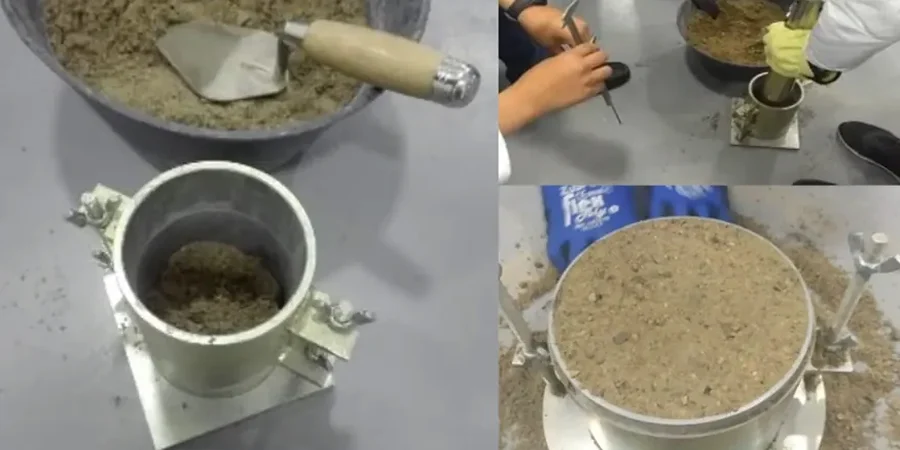
A California Bearing Ratio study quantifies the load-bearing capacity of local subgrade soils, which in League City often consist of high-plasticity Beaumont clays with variable moisture content. This test provides the essential strength parameter for determining required pavement thickness in flexible designs and base layer requirements under rigid pavements, helping prevent premature failures like rutting, cracking, and differential settlement caused by inadequate support from expansive or saturated soils.
The expansive clays prevalent throughout League City can cause seasonal pavement movement as moisture changes induce swelling during wet periods and shrinkage during droughts. This cyclic movement leads to fatigue cracking in flexible pavements and faulting at rigid pavement joints. High groundwater levels also reduce subgrade strength and can cause pumping under repeated traffic loads, making proper drainage design and soil stabilization with lime or cement essential for achieving the intended pavement design life.
Roadway projects in League City require compliance with TxDOT standards and local permits from the Engineering Department, including right-of-way permits for work within city easements. Stormwater management plans must meet TCEQ regulations, and larger developments need drainage impact studies. Projects involving state highways like FM 518 or Interstate 45 frontage roads require TxDOT district office approval, while subdivision streets must conform to the League City Code of Ordinances pavement design and construction specifications.