Together, we solve the challenges of tomorrow.
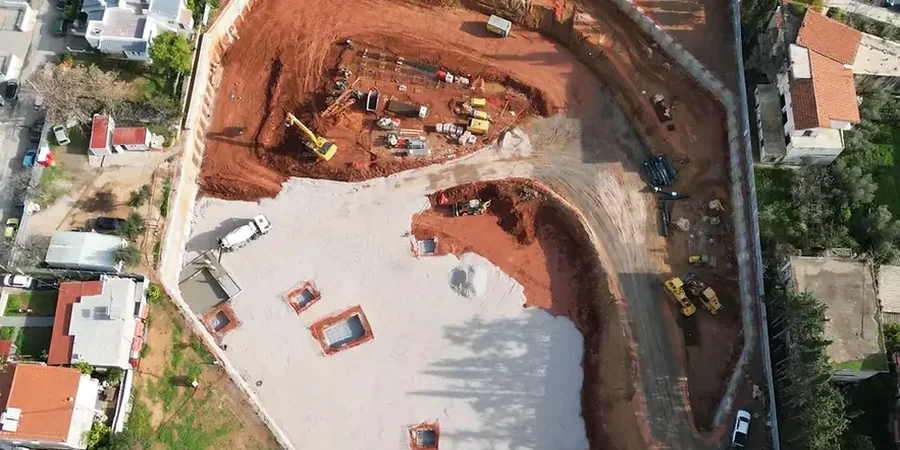
DISCOVER →Excavation work in League City sits at the intersection of ambitious urban growth and challenging subsurface conditions. This category encompasses the full lifecycle of earth removal and ground support for construction projects, from initial site investigation through shoring design to real-time performance monitoring. In a city experiencing rapid residential and commercial expansion along the I-45 corridor, proper excavation planning is not just a technical requirement—it is a safeguard against costly delays, structural damage, and safety incidents. The low-lying topography and proximity to Galveston Bay make every cut in the ground a calculated decision that must account for water management, soil behavior, and adjacent infrastructure protection.
The local geology presents a distinctive set of challenges that define excavation practice here. League City lies within the Gulf Coastal Plain, characterized by thick sequences of Pleistocene-age Beaumont Formation clays overlaid by recent alluvial and floodplain deposits. These fat clays exhibit high plasticity and significant shrink-swell potential, while interbedded silt and sand lenses create perched groundwater conditions that complicate dewatering. Near Clear Creek and its tributaries, soft organic silts and loose saturated sands can be encountered within just a few feet of the surface. For deeper excavations, contractors frequently face the transition zone between weathered overconsolidated clays and underlying normally consolidated materials, where strength can drop dramatically and unexpected groundwater inflows are common.
Regulatory compliance for excavations in League City operates under a framework that combines federal OSHA standards with Texas-specific engineering practice. OSHA 29 CFR Part 1926 Subpart P governs trenching and excavation safety nationwide, requiring protective systems for any excavation deeper than five feet unless made entirely in stable rock. The Texas Engineering Practice Act requires that excavation support systems for depths exceeding certain thresholds be designed and sealed by a licensed Professional Engineer. Locally, League City's adopted International Building Code provisions address foundation excavations and require protection of adjacent properties through underpinning or shoring when excavations extend below neighboring footings. The City's floodplain management ordinance adds another layer of oversight, as many excavation sites fall within mapped Special Flood Hazard Areas where dewatering and soil disturbance can affect drainage patterns.
Projects that demand professional excavation solutions range widely across the built environment. Municipal utility installations and replacements—water mains, sanitary sewers, and storm drainage systems—account for a significant portion of trenching activity, often requiring geotechnical design of deep excavations when crossing major arterials or navigating existing utility corridors. Commercial developments with underground parking structures or building basements push depths beyond twenty feet, where shoring systems must resist lateral earth pressures and hydrostatic loads. The region's ongoing transportation improvements, including bridge replacements and roadway widenings, frequently involve geotechnical analysis for soft soil tunnels where open-cut methods are impractical beneath active roadways or environmentally sensitive areas. Throughout construction, geotechnical excavation monitoring provides the data necessary to verify design assumptions, detect ground movements before they threaten adjacent structures, and adjust construction sequences in real time.
League City's Beaumont Formation clays are highly plastic and prone to shrinkage and swelling with moisture changes, while interbedded silt and sand layers create perched groundwater that complicates dewatering. Near waterways, soft organic silts and loose saturated sands can collapse rapidly if unsupported. These conditions demand thorough geotechnical investigation before any excavation begins.
Under the Texas Engineering Practice Act, excavation support systems for deeper or complex excavations must be designed and sealed by a licensed Professional Engineer. OSHA also mandates that protective systems for trenches deeper than five feet be designed by a qualified person, and League City building code provisions require engineered shoring when excavations extend below neighboring foundations.
League City's low elevation and proximity to Galveston Bay result in high groundwater tables across much of the area. Perched water in sand lenses and seasonal fluctuations near Clear Creek can create unexpected inflows. Effective dewatering systems, cutoff walls, or wellpoint arrays are often necessary, and discharge must comply with local floodplain and stormwater regulations.
Deep excavations are common for underground parking structures, building basements, utility installations below existing infrastructure, and transportation projects such as bridge foundations or roadway underpasses. Commercial developments along the I-45 corridor and municipal sewer and drainage projects frequently require shoring systems designed for depths exceeding fifteen to twenty feet.